


Smart BSL Containment Innovations Built for Real-World Use
West Texas Filters, Inc.
Mar 10
5 min read

When making system selections for your project, we know budget matters. But the long-term value built into Camfil’s latest CamContain BSL BIBO containment housing deserves serious consideration. And we know your clients would appreciate it.
These innovations are designed to deliver safety, efficiency, and performance benefits that will serve the facility for decades.
But first, let's take a look at one of the more traditional models:

Viewport
The first thing we notice is that this model does not include a viewport. The benefits of a viewport extend beyond convenience; it is an important feature on a BSL BIBO containment housing because it allows the user to visually inspect the interior of the unit without opening it. This visibility can help confirm several important conditions:
Bag integrity or bag presence
Filter condition
Gasket seating
Internal hardware alignment
Differential pressure indicator (if visible inside)
A viewport is a valuable addition to any BSL containment housing because it allows these checks to be performed without breaching the system. We have personally encountered a BSL unit that had no bag installed from the previous service visit. When the housing was opened, the contaminants inside immediately became airborne. Simply being able to verify the presence of a bag before opening the unit can significantly reduce this type of risk
LOTO
The second gap in this model is the absence of a Lockout/Tagout (LOTO) system. Without a LOTO system in place, the risk level increases when working on the unit, particularly during filter changeouts. Without proper lockout/tagout capability:
A fan could energize while a technician is performing a changeout
Airflow could resume unexpectedly
Dampers could actuate
Controls could call for operation remotely
Any of these scenarios could expose technicians to sudden airflow, pressure changes, or moving components while the housing is open—potentially releasing biohazardous contaminants. Additionally, OSHA standard 29 CFR 1910.147 requires the use of lockout/tagout procedures to control hazardous energy during servicing and maintenance.
Door Design
Another noticeable limitation in this model is the door design. It does not feature a quick-access or hinged door. Instead, the access panel is secured with four threaded studs—one at each corner—fastened with hand knobs.
Over time, the threads on these studs can wear due to repeated removal and reinstallation during routine filter changes and maintenance. This can make the panel more difficult to secure properly. Reinstalling the door can also be cumbersome, as the technician must carefully align the four holes in the access panel with the threaded studs before tightening the knobs. In practice, this process can slow maintenance and add unnecessary frustration during filter changeouts.
Individually, these design omissions may appear small, but in containment applications, the details matter. Viewports, proper lockout/tagout capability, and well-designed access doors all contribute directly to technician safety, maintenance efficiency, and the integrity of the containment process itself.
When these features are missing, routine service becomes more difficult and the potential for exposure increases. As BSL facilities continue to prioritize safety and operational reliability, evaluating these seemingly small design elements becomes an important part of selecting the right containment housing.
In the next section, we’ll examine Camfil's additional design considerations that further distinguish well-engineered BIBO housings from those that simply meet the minimum requirements.
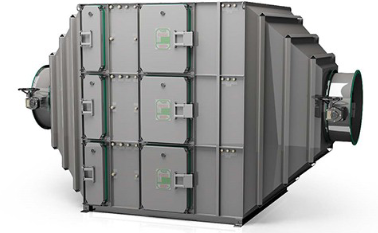
Camfil's Additional Features That Strengthen BIBO Containment Performance
Beyond the basic physical design of the housing, there are several other features that play an important role in improving safety, verification, and long-term serviceability in BIBO containment systems.
In-Place Filter Testing Capability Using CamContain TSU and TSD Capabilities
One important feature in modern containment housings is the ability to perform in-place filter testing. Dedicated test sections allow technicians to evaluate HEPA filter integrity without dismantling the system. These sections typically include aerosol injection ports and sampling connections so that leak testing or overall efficiency testing can be performed while the filter remains installed.
This capability is critical in high-containment environments such as biosafety laboratories, pharmaceutical facilities, and research applications where filters must meet strict performance standards. Being able to verify filter integrity in place helps ensure the system is operating correctly and provides documentation that the filtration barrier is performing as intended.
TSD - Test Section Downstream and TSU - Test Section Upstream models
Positive Filter Clamping and Sealing
Another important design consideration is the mechanism used to secure the filter within the housing. Proper filter clamping ensures consistent gasket compression and prevents bypass leakage around the filter frame.
Some modern containment housings incorporate enhanced clamping mechanisms designed to provide positive filter positioning and secure sealing pressure. These systems help maintain proper gasket compression during operation and reduce the risk of leaks developing over time due to vibration or airflow fluctuations.
In containment applications, maintaining a tight seal around the filter is essential. Even a small bypass leak can compromise the entire filtration system.
Modular Housing Design

Another advancement in containment housing design is modularity. Rather than relying on a single housing configuration, modular systems allow facilities to configure multiple stages of filtration—such as prefilters, HEPA filters, and testing sections—within a unified containment system.
This flexibility allows engineers and facility managers to design systems that match the airflow requirements and contamination risks of their specific application. Modular systems also make it easier to expand or modify the filtration setup in the future as facility needs evolve.
Built-In Service and Safety Features
Camfil's containment housings also include additional features designed to improve both safety and serviceability during filter changeouts. These can include:
Integrated bagging rings for safe BIBO changeouts
Support shelves to assist with filter handling during removal and installation
Ports for aerosol injection and filter scanning
Connections for safe decontamination procedures when required
These features are designed to minimize technician exposure to hazardous contaminants while also making maintenance more efficient and repeatable.

Why These Details Matter
In high-containment environments, a BIBO housing is more than just a box that holds a filter. It is a critical safety component that protects technicians, facility occupants, and the surrounding environment from hazardous airborne contaminants.
Design details such as testing capability, secure filter clamping, modular configuration, and service-friendly components all contribute to the overall effectiveness of the containment system. Facilities that evaluate these features carefully are better positioned to maintain long-term system reliability and ensure that filter maintenance can be performed safely and efficiently.
Ultimately, selecting the right containment housing is not simply a matter of initial cost. It is about ensuring that the system will continue to support safe operation, efficient maintenance, and reliable filtration performance throughout the life of the facility. When these considerations are taken into account during the design and selection process, facilities are far better positioned to protect both their personnel and their mission-critical environments.


Comments